FREE sourcing support and up to 3% matching support for qualified US business buyers. Eligibility applies to qualified business buyers and is confirmed after we review your product, quantity, destination, and sourcing requirements.

A buyer brief, comparable material options, clear supplier responsibilities. SelvedgeVista Procurement is an independent sourcing partner and is not loro piana.

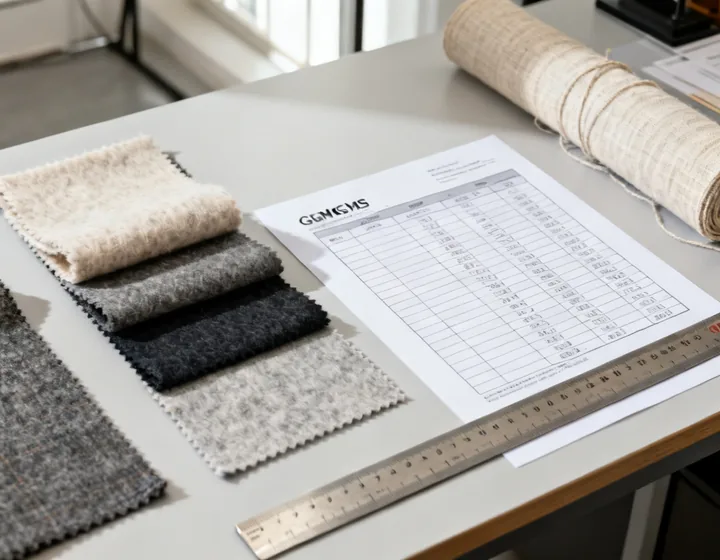
Unbranded wool and linen swatches with a GSM worksheet on a specification desk

Independent mill matching · not a brand store

Independent sourcing for loro piana material references

  1. Identify the reference article
  2. Compare mill answers on one brief
  3. Approve samples before bulk

SelvedgeVista Procurement is an independent sourcing partner. A loro piana search identifies the buyer starting point; proposed mills, constructions and lots are not claimed as authorized, identical or genuine branded inventory.

Build a Fabric Brief

Agree the specification before mill prices move

GSM and usable width
Record target, tolerance and whether width is cuttable cloth after selvedge, not loom state. Yield changes when mill offers quote different usable widths against the same nominal GSM.
Composition and construction
Write fiber percentages, yarn system and weave or knit structure. Leave a field open when the mill must declare the exact article rather than filling a guess that later blocks comparison.
Color and finish
Identify retained swatch, lab dip or strike-off identity. Piece-dye, yarn-dye, print, coating, peach, mill-wash and water-repellent finishes change hand, shade and test scope and must be listed as inclusions or exclusions.

Buyers who arrive from a loro piana query still need measurable fields. Brand volume is not apparel-fabric demand. Difficulty figures on this site follow the reviewed keyword file; unknown KD is not rewritten as an easy ranking claim.

Material scope for this inquiry desk

Start from apparel fabrics and adjacent home-textile constructions when the reference is luxury wool, linen or mixed-fiber cloth. Catalog cards on the products page are generic inquiry families, not stocked branded pieces.

Open inquiry families

Apparel route

Woven apparel fabric, knitted apparel fabric, and shirting or suiting fabric when the brief names wool, linen or wool-silk-linen handles. Confirm construction, GSM and finish against the retained reference instead of a color story alone.

Adjacent options

Upholstery, curtain and contract textiles only when the same mill comparison is needed for interior programs. Outdoor exposure, abrasion methods and flame notes stay on the applications page and are not assumed from apparel GSM.

Evidence ledger for proposed articles

Supplier
Legal entity and role for this order: mill, converter or trader. Platform network counts from third-party sourcing sites are not this desk's supplier access.
Report
Bind composition, construction, weight, usable width, colorfastness, shrinkage, abrasion or weathering results to method, edition, specimen, conditioning, laboratory, date and the quoted article. A method title is not a result.
Approval
Named swatch, lab dip or pre-production version. Certificates requested by the buyer (OEKO-TEX, GOTS, GRS, ISO) must show issuer, scope, site and article connection; this service does not hold those credentials.

Keep sample and bulk changes visible

01 Clarify the brief

Resolve fiber, construction, GSM, usable width, color, finish, quantity unit, US destination and sample stage. Open items stay marked open rather than being converted into implied mill capability.

02 Compare suppliers

Collect mill answers on one matrix. Price is compared only after packaging, freight, duties, sampling charges, testing and payment terms share the same delivered scope.

03 Approve the sample

A stock swatch screens hand and construction. A lab dip addresses color. A strike-off addresses print. A pre-production sample addresses process. None automatically represents the bulk dye lot.

04 Agree bulk checks

Record shade-lot policy, inspection sampling, defect rules and document pack. Stages are process notes, not promised lead times or factory capacity claims.

Buyer applications in this material cluster

Apparel development

Tailoring, shirting and knit programs need next-to-skin handle, seam slippage and care claims recorded before mill selection. End use is written by the buyer, not inferred from a luxury brand query.

Upholstery programs

Seating and drapery need abrasion basis, lightfastness, backing and flame notes when those tests apply. Apparel GSM is not an interior specification.

Outdoor material selection

Weathering, water, coating and dimensional stability belong on the outdoor brief. Suiting cloth and outdoor cloth are different purchase files even when a search string mentions both.

Prepare a complete RFQ

  1. What defines the approved color reference?

    Name the retained swatch, lab-dip code, illuminant and shade-lot rule. Visual memory of a loro piana boutique piece is not an approval standard. Confirm the responsible reviewer before mill comparison starts.

  2. How should quotations be compared?

    Align composition, construction, GSM, usable width, finish, quantity, packaging, freight, duties, sampling, testing and payment. A lower unit price is not comparable when usable yield or inspection scope differs.

  3. Who performs testing and inspection?

    The mill, a named laboratory or a buyer-appointed inspector. This desk coordinates the request; it does not certify lots or publish savings percentages without same-scope quotes.

Ready to compare mill options against one brief?

Share the reference article, quantity and US destination. Factory wholesale quotations are collected for the same specification; no fixed discount or lowest-price promise is published.